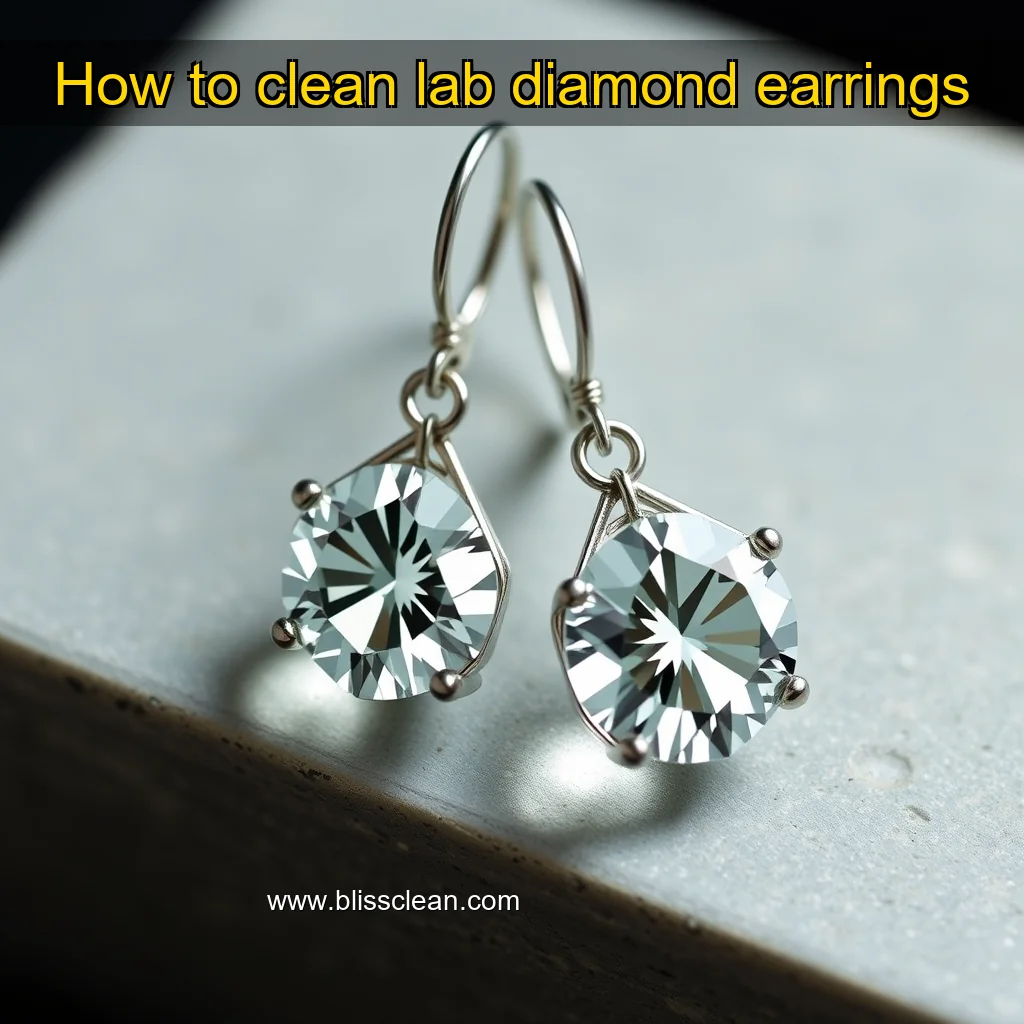
To keep your lab-grown diamond earrings sparkling, follow these simple tips:
Cleaning and Maintenance
Storage and Handling
Tips for Long-Term Care
Cleaning Your Lab-Grown Diamond Earrings for Maximum Sparkle and Shine.
Cleaning Methods for Lab-Grown Diamond Earrings
Soaking in a Solution
Cleaning with a Soft Cloth
Avoiding Harsh Chemicals
Cleaning Tips
Conclusion
Regular cleaning of your lab-grown diamond earrings is essential to maintain their sparkle and shine. By following these simple steps and tips, you can keep your earrings looking their best and extend their lifespan.
Cleaning Your Diamond Jewelry
Cleaning your diamond jewelry is an essential part of maintaining its sparkle and shine. A well-maintained diamond piece can last for generations, and regular cleaning can help prevent damage and keep it looking its best. In this article, we will discuss the best methods for cleaning diamond jewelry, including the use of soft brushes and gentle cleaning solutions.
Choosing the Right Cleaning Method
When it comes to cleaning diamond jewelry, it’s essential to choose the right method to avoid damaging the stone or the setting. Here are some tips to consider:
Cleaning with a Soft Brush
Using a soft brush to gently scrub the diamond is an effective way to clean it without damaging the stone or the setting. Here’s how to do it:
Cleaning with a Gentle Cleaning Solution
Using a gentle cleaning solution, such as mild soap and water, is another effective way to clean diamond jewelry. Here’s how to do it:
The ultrasonic cleaner is a device that uses high-frequency sound waves to clean objects. It works by creating a pressure wave that dislodges dirt and debris from the surface of the objects being cleaned.
The Power of Ultrasonic Cleaning
Ultrasonic cleaning is a non-invasive, chemical-free, and environmentally friendly method of cleaning that has gained popularity in recent years. This technique uses high-frequency sound waves to dislodge dirt and debris from the surface of objects, making it an attractive alternative to traditional cleaning methods.
How Ultrasonic Cleaning Works
The process of ultrasonic cleaning involves the use of a device that produces high-frequency sound waves, typically in the range of 20-40 kHz. These sound waves create a pressure wave that dislodges dirt and debris from the surface of the objects being cleaned. The sound waves also help to break down any remaining dirt and debris, making it easier to remove.
Lab-grown diamonds are created through a process of high-pressure and high-temperature (HPHT) or chemical vapor deposition (CVD). These processes replicate the natural processes that create diamonds in the earth’s crust.
The Importance of Cleaning Lab-Grown Diamond Earrings
Lab-grown diamond earrings are a popular choice for those looking for a beautiful and affordable alternative to traditional mined diamonds.
Cleaning Your Diamond Earrings: A Guide to Maintaining Their Brilliance
Understanding the Risks of Chemicals
When it comes to cleaning diamond earrings, it’s essential to be aware of the potential risks associated with certain chemicals. Bleach, chlorine, and other strong cleaning substances can damage the diamond, causing it to lose its brilliance and luster. In fact, exposure to these chemicals can even lead to the formation of scratches and pits on the surface of the diamond. Chemicals like bleach and chlorine can react with the diamond’s surface, causing it to become discolored or develop an uneven texture. Other cleaning substances, such as ammonia and hydrogen peroxide, can also damage the diamond or cause it to become brittle.
The Importance of Water Temperature in Cleaning
When it comes to cleaning, many of us rely on boiling water to sanitize and disinfect surfaces. However, this approach may not be as effective as we think. In fact, using boiling water can sometimes do more harm than good.